Block (XYZ) Touts Bitcoin as ‘Everyday Money’ With 800,000 Merchants Now Accepting It
Bitcoin Magazine Block (XYZ) Touts Bitcoin as ‘Everyday Money’ With 800,000 Merchants Now Accepting It Block is accelerating its push to make bitcoin everyday money, with Miles Suter unveiling new payments, rewards, and self-custody tools at Bitcoin 2026 alongside proof of $2.2 billion in BTC reser
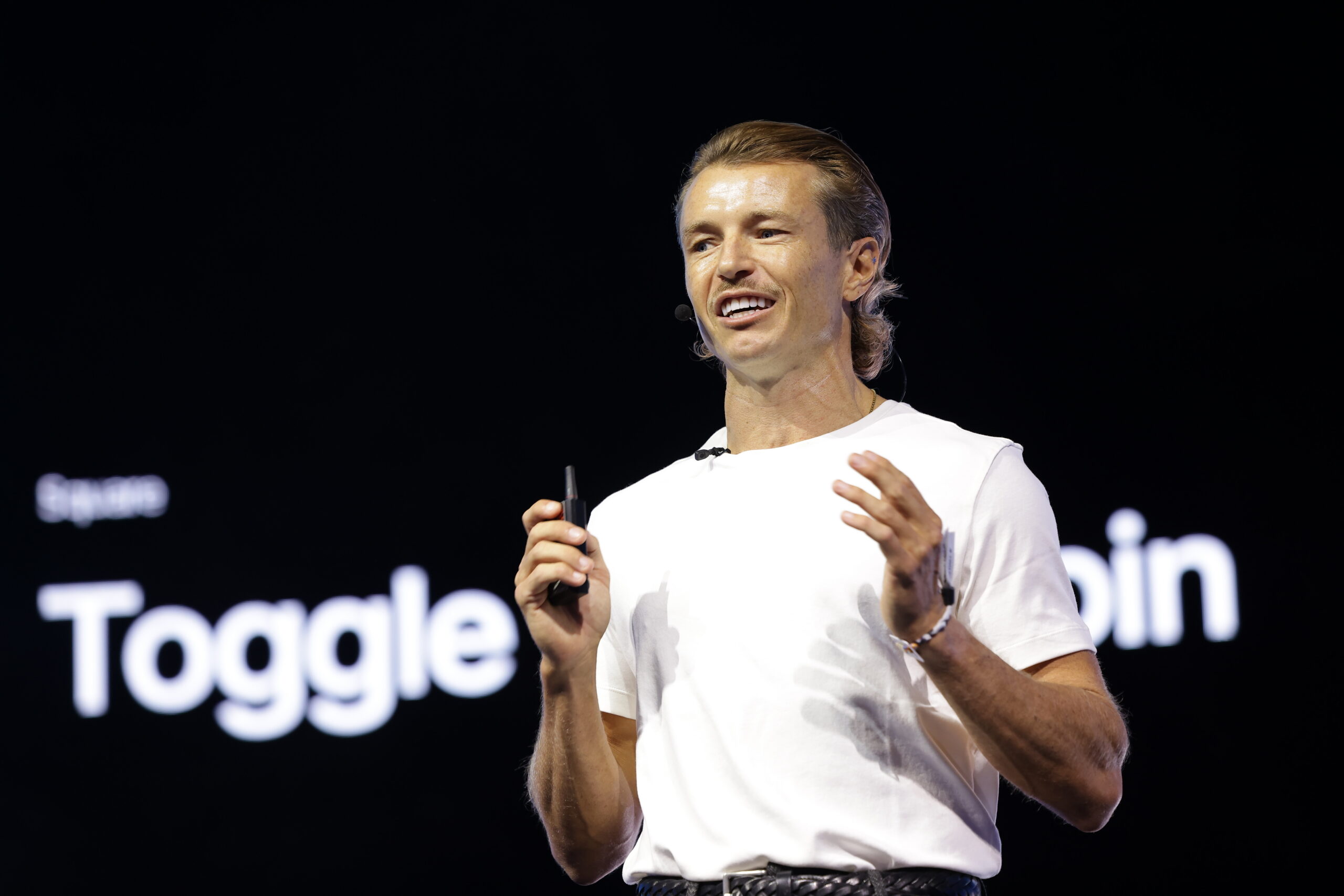
Image: Bitcoin Magazine
Bitcoin Magazine
Block (XYZ) Touts Bitcoin as ‘Everyday Money’ With 800,000 Merchants Now Accepting It
Block’s Bitcoin Product Lead Miles Suter took the Nakamoto Stage at Bitcoin 2026 in Las Vegas Tuesday morning with a clear message: bitcoin must circulate, not just sit still.
“If Bitcoin doesn’t function as peer-to-peer cash, it loses the quality that makes it transformational,” Suter said, framing Block’s entire product push around the idea that Satoshi built the network so “the entire world could operate on a freer, fairer financial system.”
The presentation came one day after Block rolled out a wave of bitcoin-focused product announcements on April 27, making it one of the most aggressive product offensives the company has staged at a single conference.
JUST IN: Block announces there's now over 808,000 Square merchants accepting bitcoin payments!
— Bitcoin Magazine (@BitcoinMagazine) April 28, 2026
New businesses are accepting BTC every 8 seconds
pic.twitter.com/1eDTWjXj1J


Merchant adoption hits 800,000 — and climbing
Suter cited live traction as proof the strategy is working. Block now has more than 800,000 Square businesses with bitcoin payments auto-enrollment enabled, and a new business is activating the feature every eight seconds, he said on stage.
The figure builds on Block’s March 2026 decision to automatically enable bitcoin payments for eligible U.S. Square sellers, a rollout that reached millions of merchants in one move. Suter also unveiled a tap-to-pay bitcoin feature, saying Block is on track to make bitcoin payments at the point of sale as seamless as Apple Pay.
The system uses NFC hardware and the Lightning Network for settlement, requires no QR codes, and carries zero processing fees through 2026.
Suter outlined a future-state income loop: workers receive their paycheck in Cash App, convert it to bitcoin, and sweep those funds into self-custody. That vision ties directly into Block’s upgraded product stack announced Monday.
Cash App now offers auto-conversion of peer-to-peer payments into bitcoin, a 5% Bitcoin Back rewards program at Square merchants, and bitcoin withdrawal limits raised fivefold to $10,000 per day and $25,000 per week.
On the custody side, Block debuted a new Bitkey hardware wallet with a built-in touchscreen and 2-of-3 multisig architecture, removing the need for seed phrases and tying transaction verification to the device screen rather than an external system.
“Bitcoin only works if no single company controls it,” Suter said.
Block’s proof of reserves: $2.2 Billion in BTC
Block also published its Q1 2026 Proof of Reserves on April 27, disclosing total holdings of 28,355.05 BTC worth approximately $2.2 billion. Of that total, 19,357.16 BTC — roughly $1.5 billion — belonged to customers, while the company’s corporate treasury held 8,997.89 BTC valued at approximately $696 million. The reserves dashboard uses on-chain cryptographic signatures for public verification, and Block said the holdings reflect active control rather than historical snapshots.
The disclosure placed Block among a growing list of firms adopting on-chain transparency measures, though analysts noted that proof-of-reserves alone does not capture liabilities or customer obligations.
Suter’s panel, titled “Living on Bitcoin,” ran as part of a broader conference theme pushing bitcoin toward transactional utility. A dedicated session at Bitcoin 2026 is also advocating for a de minimis tax exemption on small bitcoin transactions — a policy that, if enacted, would remove the capital gains reporting burden that currently discourages everyday spending.
Jack Dorsey has argued publicly that bitcoin will fail as a technology if it cannot function as money, a position Suter echoed on stage Tuesday when he said Block’s goal is to make bitcoin “everyday money.”
Original article
Block (XYZ) Touts Bitcoin as ‘Everyday Money’ With 800,000 Merchants Now Accepting It
Published by Bitcoin Magazine